What Grand Final Week Can Teach Us About Fertility, Fitness and Recovery
Melbourne is in Grand Final mode, and for us at No.1 Fertility it always feels particularly close to home.
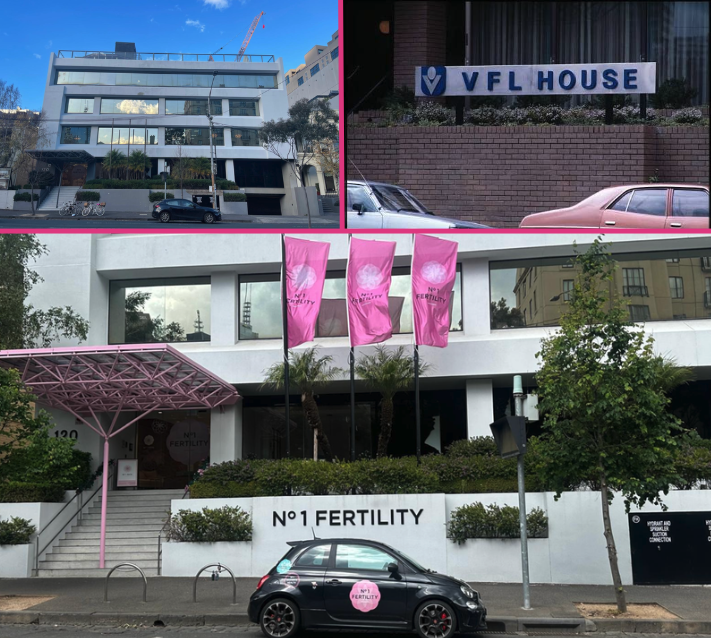
Our flagship clinic at 120 Jolimont Road, East Melbourne sits beside the MCG in a building with its own football history. It was once VFL House, then AFL House, and today it is home to No.1 Fertility.
We love that progression — VFL House to AFL House to No.1 Fertility.
The purpose of the building has changed, but in some ways the themes are still familiar: teams, preparation, strategy, performance and people working towards something important.
During finals week, that history feels especially alive. The streets get busier, the MCG precinct changes and there is a real sense of energy around Jolimont.
It also feels like a good time to talk about something elite sport understands very well: performance is not just about pushing harder.
Behind every athlete who runs onto the MCG is a carefully managed combination of training, nutrition, recovery, sleep, medical care and support. Fertility is obviously very different, but there is one useful parallel — doing more is not always the answer.
Fitness matters, but balance matters too
Regular exercise is an important part of overall health and wellbeing. For most people, staying active is a positive thing and can support cardiovascular health, metabolic health, sleep, mood and weight management.
Where things become more complicated is at the extreme end. Very high levels of exercise, particularly when combined with inadequate energy intake, can affect menstrual cycles and ovulation in some women.
That does not mean exercise is bad for fertility. It simply means the body needs enough energy, enough nutrition and enough recovery to function well.
The same principle applies more broadly during fertility treatment. Many patients understandably want to do everything they possibly can to improve their chances. They may change their diet, increase exercise, add supplements or try to optimise every part of their routine.
Some of those changes may be useful, but trying to control everything can also become exhausting. Good fertility care should help patients understand what genuinely matters, what is supported by evidence and what they do not need to overthink.
Fertility is not a competition
Sport is built around competition. Fertility is not, but it can sometimes feel that way.
Patients may feel they are racing against age, comparing themselves with friends or wondering whether they should be doing more. That pressure can be especially strong when someone is already investing so much physically, emotionally and financially into treatment.
Healthy lifestyle choices are important, but fertility is influenced by many different factors, including age, egg quality, sperm quality, reproductive anatomy, genetics and underlying medical conditions.
There is rarely one single reason, and fertility should never feel like a reflection of how hard someone tried.
Sometimes the plan needs to change
One of the things elite sport does well is adapt.
If something is not working, the answer is not always to train harder. The program may change, recovery may increase, further investigation may be needed or the strategy may shift.
Fertility treatment can be similar in that sense.
A good fertility plan should evolve with the patient, their test results, their response to treatment and what is learned along the way. Sometimes that means changing medication, adjusting timing, investigating further or simply taking a different approach.
This is one of the reasons individualised, doctor-led fertility care matters.
Every athlete has a team
No elite athlete gets to Grand Final day alone.
Behind them are coaches, doctors, physiotherapists, dietitians, strength and conditioning teams and many others working together.
We see fertility in much the same way.
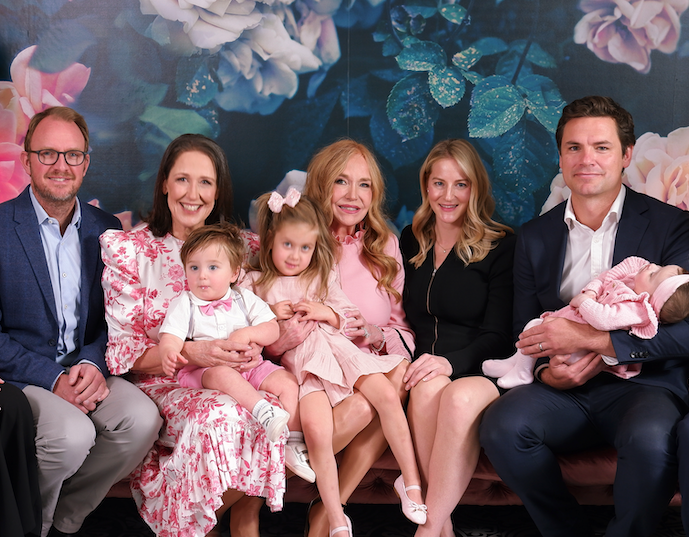
At No.1 Fertility, patients are supported by experienced fertility doctors, nurses, embryologists and the broader clinical team. The aim is to make sure patients understand their options, have access to the right people and feel their treatment is being managed as an individual rather than according to a standard formula.
There is something fitting about doing that from a building that has always been associated with teams.
VFL House. AFL House. No.1 Fertility. Different eras, but always a place where teams come together.
Taking fertility education beyond the clinic
We also believe fertility conversations should not only begin once someone becomes a patient.
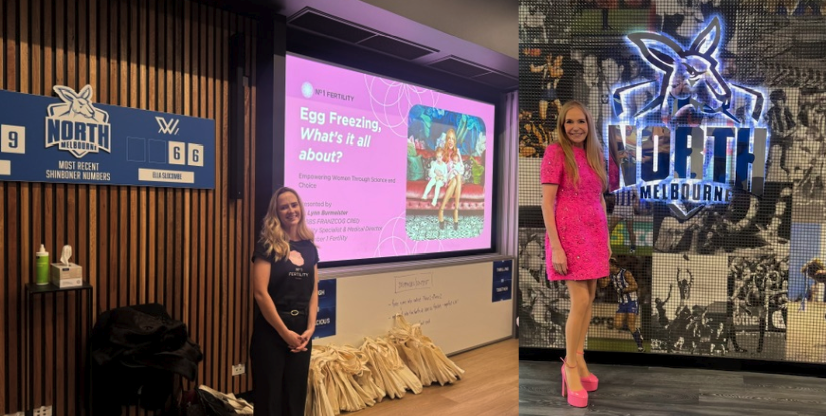
Recently, No.1 Fertility spent time with the North Melbourne AFLW team for a fertility education session. It was a great opportunity to talk openly about reproductive health, fertility and future family planning in an environment where health and performance are already taken seriously.
For elite female athletes in particular, conversations around fertility and reproductive health can be very relevant, but they are not always conversations that happen early enough.
It is exactly the sort of thing we would like to do more of.
Through No.1 On the Road, we are continuing to take fertility education into sporting clubs, workplaces, GP practices and community organisations so people can access good information before they necessarily need fertility treatment.
If your sporting club, workplace or organisation would be interested in having one of our doctors or team members speak about fertility, reproductive health, egg freezing or family planning, we would love to hear from you.
Contact marketing@number1fertility.com to discuss a guest speaker session.
A Grand Final reminder
So as Melbourne turns its attention to the MCG this weekend, there is a useful reminder in all of it.
Good performance is rarely about doing more for the sake of it. It is about preparation, judgement, support and knowing when the plan needs to change.
That applies in football, and in many ways, it applies to fertility too.