Success Rates at No. 1 Fertility
At No. 1 Fertility, we are proud to be leaders in delivering exceptional IVF outcomes, We fully support greater transparency so patients can make informed choices about in vitro fertilisation and fertility treatment options.

Our Success Rates
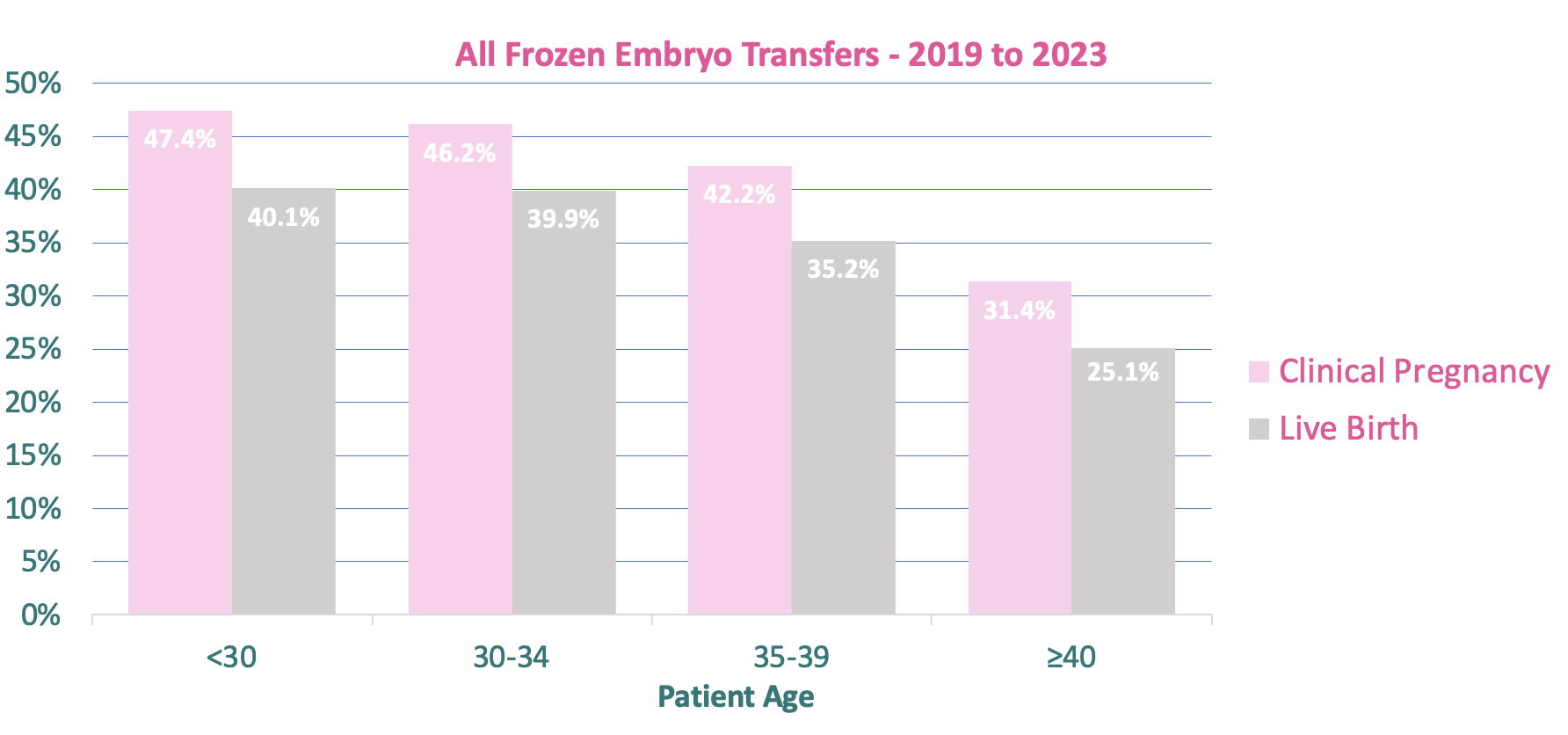
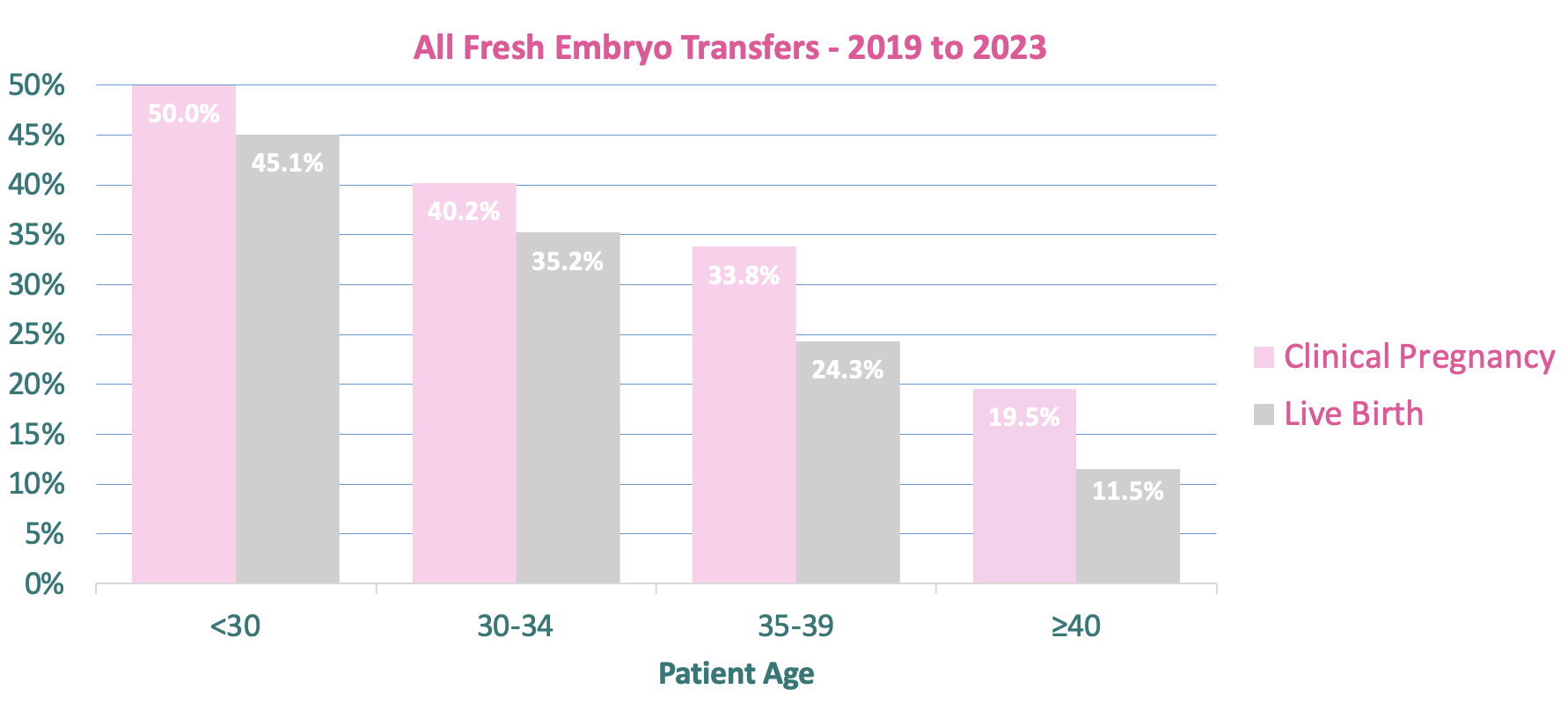
Our success rates are based on validated data submitted annually to ANZARD and independently audited as part of our accreditation process. The most recent data available is from 2023, as full year reporting requires time to confirm pregnancy and live birth outcomes.
We present results from the most recent 5 years, from 2019 to 2023. We do not select individual time periods to highlight stronger results. Instead, we share the full picture to provide a transparent and accurate reflection of our outcomes.
Our data includes all patients undergoing treatment, except those using donor eggs. This includes both IVF and ICSI cycles, patients who did or did not undergo genetic testing such as PGT, and embryo transfers performed at different stages of development, including day 3 and blastocyst stage.
Success rates are influenced by many factors including age, weight, medical history and the underlying cause of infertility. Individual results will vary depending on personal circumstances.
It is also important to note that not every treatment cycle will result in an egg collection, embryo transfer or embryos being frozen.
Genetic Testing
We are committed to transparency and sharing the full picture of our outcomes, including insights from genetic testing of embryos. Below are two key areas of data from No.1 Fertility, based on ANZARD submissions and internal records. These results are also linked from our Genetics pages for more detail.
Frozen Embryo Transfers with or without PGT testing
This chart shows pregnancy and live birth rates per embryo transferred for all No.1 Fertility patients from 2019–2023.
It highlights that while overall pregnancy rates per transfer tend to decline with age, the pregnancy rate remains consistent when a Euploid embryo is transferred, regardless of age.
Important notes:
- The chance of achieving a euploid embryo is lower in older patients. This data does not include patients who did not reach transfer when attempting preimplantation genetic testing (PGT).
- Data is based on all transfers in the last 5 reporting years, those performed from 2019-2023.

Low ‘No Result’ Rate
This chart highlights our outstanding “no result” rate for genetic testing. When performing embryo genetic testing there is always a risk of receiving “No Result” (more information on this can be found on our Genetics page here). A low “No Result” rate means more patients receive meaningful information about their embryos.
Key details:
• Data includes all embryos biopsied at No.1 Fertility in 2025 (n=1981).
• Comparisons are shown with large datasets from external PGT providers (22,833 and 136,252 samples).

To learn more about Number 1 Fertility’s guide to understanding success rates click here.
References:
*Lynch, C.A. et al. Examination of Inter Centre Variation in PGT-A “No Result Rate” and Efficacy of Re-Biopsy – Analysis of 22,833 Samples 2015–2019. ASRM Annual Meeting 2021. Fertility & Sterility Vol. 116, Issue 3, e395, Supplement, September 2021.
*Barrett, F. et al. Evaluation of No-Call Etiologies in Preimplantation Genetic Testing for Aneuploidy (PGT-A): Influence on Genetic and Clinical Outcomes Following Rebiopsy. ASRM Annual Meeting 2024. Fertility & Sterility Vol. 122, No.4, Supplement, October 2024.