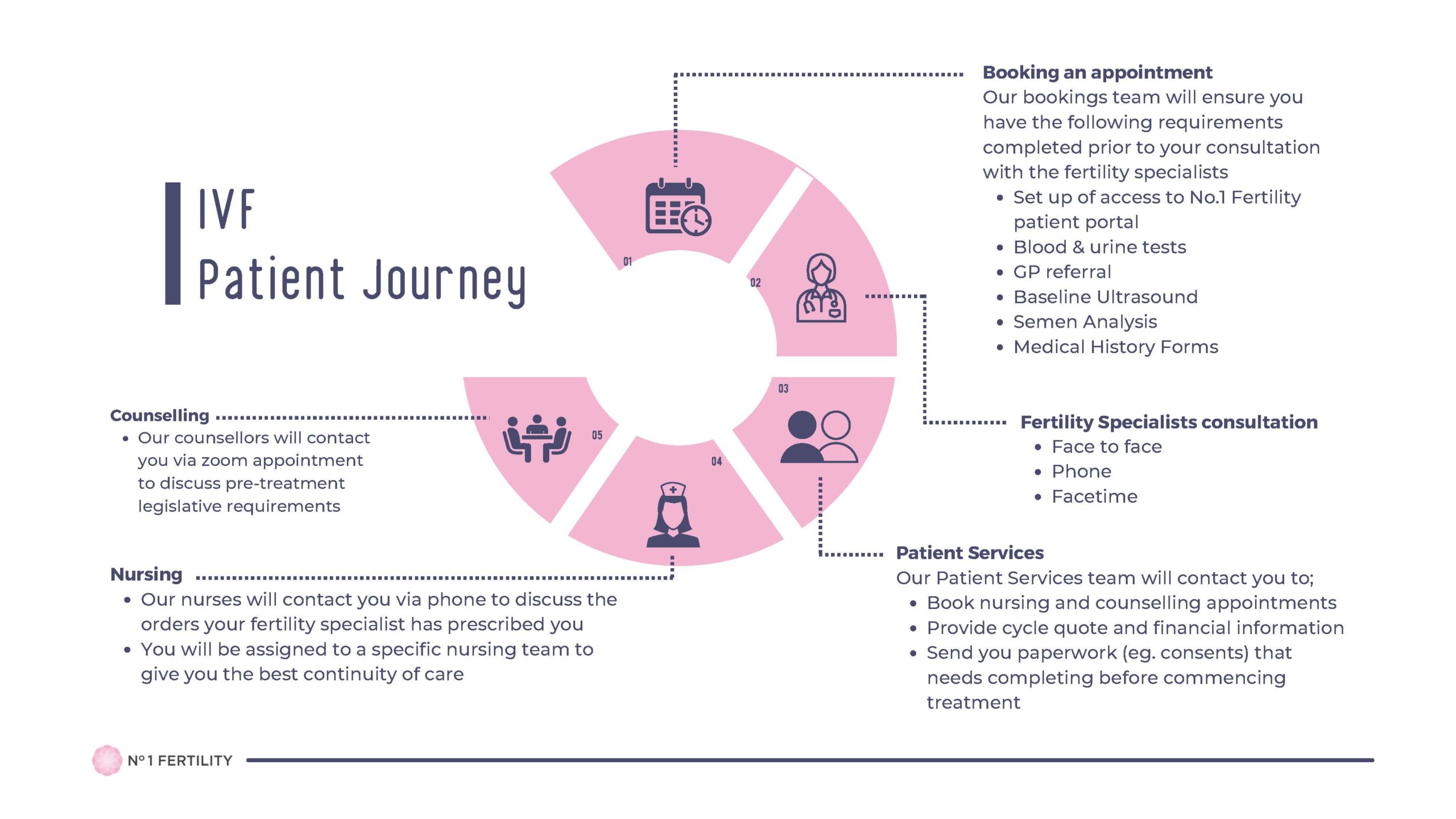
In Vitro Fertilization (IVF)

IVF stands for In Vitro Fertilisation, where eggs and sperm are brought together outside the body to fertilise. The resulting embryos are grown in the laboratory for around five days, until they reach the blastocyst stage and are ready for transfer or freezing.
IVF is recommended for many different reasons, including unexplained infertility, endometriosis, tubal (fallopian tube) factors, sperm‑related issues, and for same‑sex couples or single women using donor sperm. It’s one of the most common and well‑established assisted reproductive technologies available today.
Stimulation and monitoring
To start IVF, the ovaries are stimulated with fertility medications to encourage multiple follicles—and therefore multiple eggs—to develop. There are several stimulation protocols, and your No.1 Fertility Specialist will choose the best one based on your test results, your reason for needing IVF, and your response in any previous cycles (if relevant). The goal is to retrieve a good number of high‑quality eggs.
During stimulation, follicle growth is monitored using blood tests and ultrasound scans. When the follicles reach an appropriate size, indicating the presence of potentially mature eggs, a final “trigger” injection is given to help the eggs mature.
Egg collection
Around 36 hours after the trigger injection, egg collection is scheduled. This is a minimally invasive procedure performed under light sedation or anaesthesia. Using ultrasound guidance, a fine needle is passed through the vaginal wall into the ovaries to gently collect the eggs.
On the day of collection, if a fresh sperm sample is being used, this should be provided so the laboratory team can inseminate the eggs. There are two main fertilisation techniques that can be used:
- Conventional insemination (IVF) – Sperm are placed with the eggs in a dish.
- Intracytoplasmic sperm injection (ICSI) – A single sperm is injected directly into each egg.
Ready for personalised advice? No obligation chats await.
Free Nurse Chat: Cycle tracking and health basics.
Free Embryology Chat: Egg quality deep‑dive and lab insights.
Free Finance Chat: Bundles, rebates, and affordability.
Natural/Conventional IVF
Natural IVF is when the egg is put in a dish together with thousands of sperm that have been prepared by the laboratory. The sperm then need to go through all the stages in the fertilisation process, so a form of natural sperm selection occurs with only the fittest sperm able to fertilise the egg.
Intracytoplasmic Sperm Injection (ICSI)
The ICSI process requires highly specialised skills and equipment to bypass the physical barriers between the sperm and egg. However, despite selecting the sperm most likely to achieve fertilisation and being deposited directly into the egg, fertilisation is not guaranteed.
Once successful fertilisation is observed, the egg grows and develops over the next five days where the cells in the egg continue to divide until a blastocyst is formed. Once that blastocyst stage is reached, the embryo can be transferred back into the uterus, frozen or undergo genetic testing.
ICSI is an effective method for treating male factor infertility problems, such as low sperm count, poor motility, or poor morphology. ICSI is also used in cases where Natural/Conventional IVF procedures fail to achieve fertilisation.
ICSI has revolutionised the field of assisted reproductive technology, making it possible for many couples to have babies that would not have been possible otherwise.